







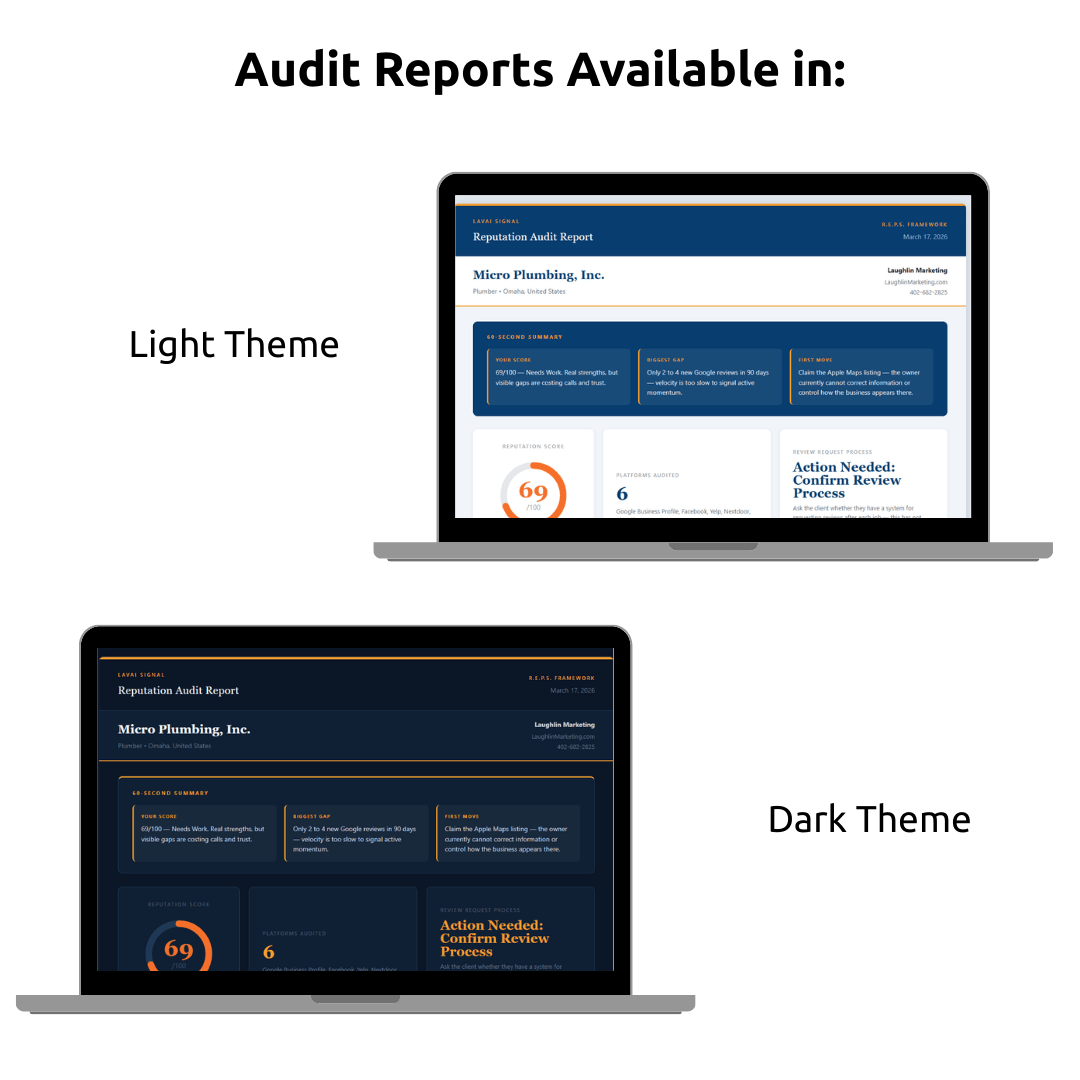







60-Second Summary
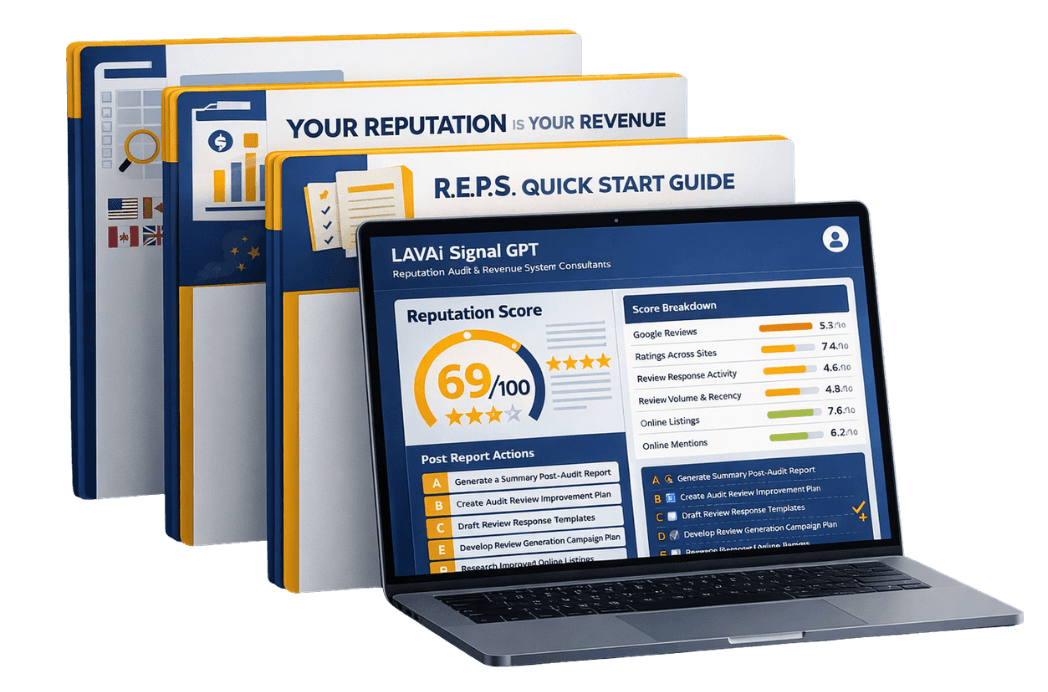
| Component | Score | Max | Notes |
|---|---|---|---|
| Star Rating (Google) | 21 / 25 | 25 | 4.7 stars (strong) |
| Review Volume (Google) | 12 / 20 | 20 | 66 reviews (moderate) |
| Owner Response Activity | 10 / 20 | 20 | Always: Google Business Profile | Sometimes: Facebook, Yelp, Nextdoor |
| Review Recency | 15 / 15 | 15 | This week (Google Business Profile) |
| Review Velocity (90-day) | 4 / 10 | 10 | 2 to 4 Google reviews / 90 days |
| NAP Consistency | 7 / 10 | 10 | Minor diff: Apple Maps | Minor diff: Yelp |
| Total Reputation Score | 69 | 100 |
Micro Plumbing, Inc. has a 4.7-star Google rating and 66 total reviews — the primary signals that AI-powered search tools use to evaluate local business credibility. The profile shows genuine customer satisfaction but has not yet built the review depth and velocity that would make it a consistently recommended result in AI-generated local searches.
Tools like Google AI Overviews and Bing Copilot favor businesses with strong, recent review activity, consistent owner engagement, and clean listing data across all major platforms. With 2 to 4 new Google reviews in the last 90 days and response patterns that vary by platform, this profile is visible but not dominant in AI recommendation outputs. ChatGPT and Perplexity draw on the same authority signals, so the same gaps affect discovery across all major AI surfaces.
The path to stronger AI visibility is the same as stronger traditional local search performance: more consistent review generation, faster response coverage, and tighter listing accuracy. Closing the current gaps would meaningfully improve how AI tools assess and surface this business in local queries.
Note: This assessment is directional, based on known AI ranking signals. It is not a guarantee of placement. For a full AI visibility audit, see LAVAi Amplify.
Micro Plumbing, Inc. is in a position many local businesses would envy — a 4.7-star Google rating signals genuine customer satisfaction. The financial drag is not the service quality; it is the gap between that quality and how consistently it is being converted into fresh, visible public proof. With 66 Google reviews and slow velocity, the business is likely losing ranking advantage and prospect consideration to competitors who collect reviews more systematically.
The improvement opportunity is concrete. Moving the Reputation Score from 69/100 toward the Strong tier (75+) requires closing the current gap in review velocity and addressing unclaimed listings on Apple Maps. Those improvements strengthen Google Maps ranking, increase trust at the moment of search, and make this profile more competitive in AI-assisted local discovery — all without changing the underlying service delivery.
The ROI case is strong because this is an efficiency problem, not a brand-repair problem. When a business already delivers quality service, even one additional booked job per month from stronger review visibility can justify reputation management services many times over. The cost of staying at 69/100 is gradual momentum loss. The upside of closing that 31-point gap is compounding trust and visibility that builds over time.
- Audit complete — 69/100, Needs Work.
- Strongest area: Star Rating at 4.7 stars.
- Biggest gap: Review Velocity.
- Review system unconfirmed — confirm before client presentation.
- Response practice on Google is strong — maintain current standard.
- Extend the same response coverage to all other review platforms.
- Set a 24-48 hour response window for all new reviews going forward.
- Implement a post-job review request by SMS or email — ask every satisfied customer for a Google review while the job is fresh.
- Set up a direct Google review link and include it in every request message.
- Claim Apple Maps immediately to take control of those listings.
- Correct NAP inconsistencies on Apple Maps, Yelp to match Google exactly.
- Maintain listing accuracy across all platforms: Bing Places, Facebook, Yelp, and Nextdoor.
- Recalculate the Reputation Score monthly to show movement in the client-facing benchmark.
- Track Google 90-day review velocity as a standing monthly KPI.
- Report monthly on new reviews, response rate, listing fixes, and score change — this is the retainer justification.